

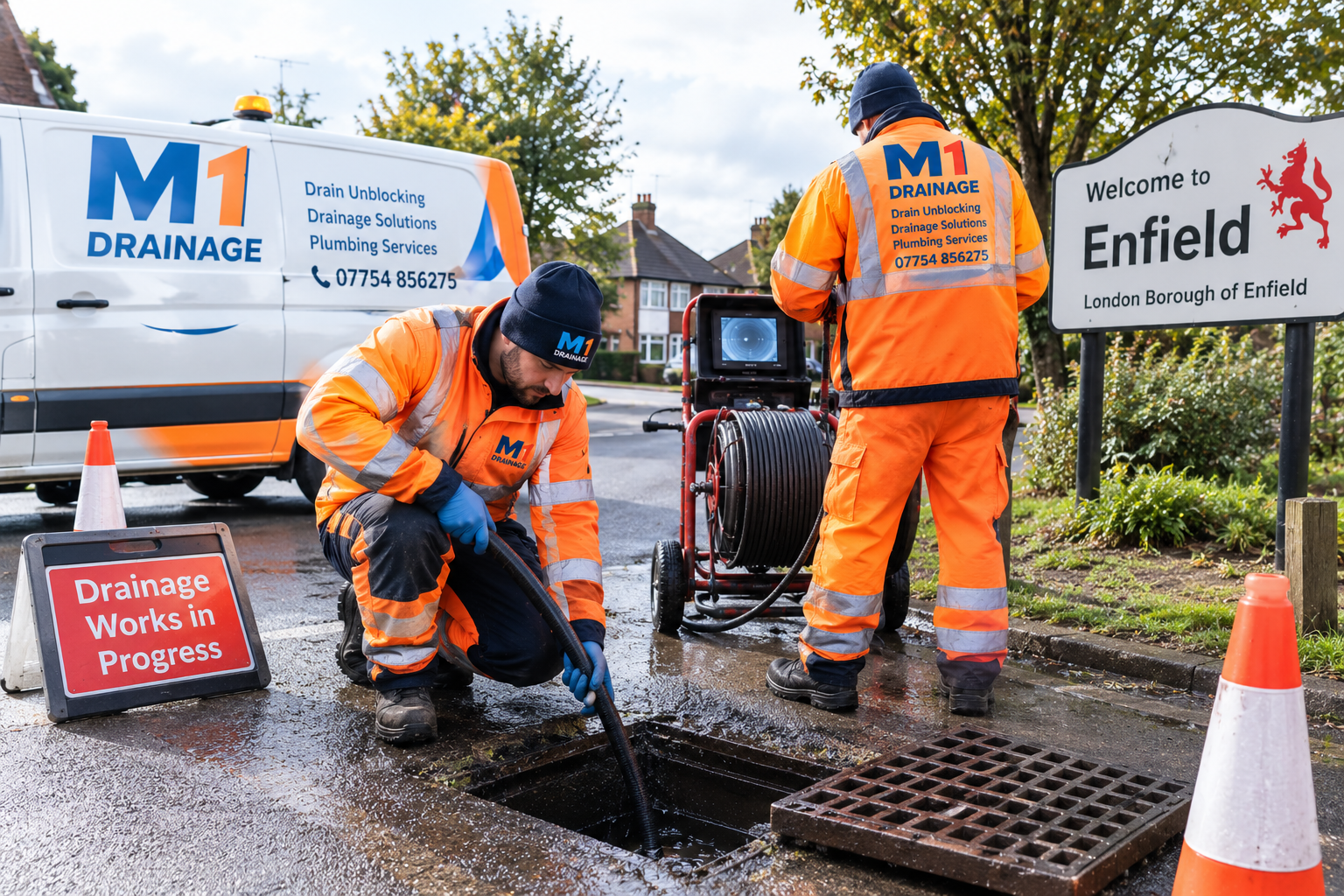
Enfield Drainage Services - M1 Drainage
Blocked Drains, Drain Repairs, CCTV Surveys and Flood Prevention
By M1 Drainage Service – Drainage Advice for Enfield and North London
Are you experiencing a blocked drain, a toilet that will not flush, unpleasant drainage smells or water collecting outside your property? This comprehensive Enfield drainage guide for 2026–2027 explains the most common drainage problems, what causes them, how to prevent them and who to contact when something goes wrong.
M1 Drainage Service helps customers understand drainage problems and the options available for resolving them. Whether you own a house, manage rental properties or operate a business, knowing how your drainage system works can help prevent costly damage and unnecessary disruption.
Need drainage assistance in Enfield?
📞 Call M1 Drainage Service: 07754 856275
💬 WhatsApp: Message our drainage team
✉️ Email: [email protected]
1. Understanding Drainage Problems in Enfield
Drainage systems remove wastewater from toilets, sinks, baths, showers, washing machines and other appliances. Separate systems may also carry rainwater away from roofs, driveways and outdoor areas.
When a drainage system becomes restricted or damaged, the consequences can range from a slow-draining sink to sewage backing up into a property.
Common warning signs include:
Toilets that flush slowly or repeatedly block.
Water collecting around an outside drain.
Gurgling noises from sinks, baths or toilets.
Persistent foul smells near drains or manholes.
Wastewater backing up into showers or ground-floor appliances.
Water leaking from underground drainage pipes.
Rainwater overflowing from gutters or downpipes.
Recurring blockages that return after being cleared.
If several appliances are affected simultaneously, the problem may be in a shared waste pipe or underground drain rather than an individual fixture.
2. Blocked Drains in Enfield: Causes and Solutions
A blocked drain is one of the most common reasons people seek professional drainage assistance.
What causes blocked drains?
Fat, oil and grease: Cooking fats can cool inside pipes, trapping food debris and gradually restricting the flow.
Wet wipes and sanitary products: These items can accumulate in pipes and contribute to stubborn blockages.
Hair and soap residue: These frequently cause restrictions in bathroom sinks, baths and showers.
Leaves and garden debris: Outdoor gullies can become obstructed by leaves, mud and other material.
Tree roots: Roots may enter existing cracks or defective pipe joints, restricting flow and contributing to structural damage.
Damaged or displaced pipes: Broken pipes, displaced joints and collapsed sections can cause repeated blockages.
How are blocked drains cleared?
The correct method depends on the location and nature of the obstruction.
Drain rods may help with suitable blockages in accessible pipes.
High-pressure drain jetting can remove appropriate deposits and obstructions.
Manual cleaning may be suitable for accessible gullies and certain waste fittings.
CCTV drain surveys can help locate hidden defects or recurring obstructions.
A blockage that repeatedly returns should be investigated rather than simply cleared again without considering the underlying cause.
Need blocked drain assistance in Enfield?
Call M1 Drainage Service on 07754 856275 or message us on WhatsApp.
3. Blocked Toilets in Enfield
A blocked toilet can quickly become a hygiene problem, particularly if it is the only toilet in the property.
Signs of a blocked toilet
The water level rises when you flush.
The toilet bowl empties slowly.
The toilet repeatedly blocks.
Gurgling occurs when other appliances drain.
Wastewater backs up into another bathroom fixture.
What should you do?
Stop flushing if the water level is rising.
Keep children and pets away from any contaminated water.
Avoid mixing drain-cleaning chemicals.
Do not force unsuitable tools into the toilet bowl.
Contact a drainage specialist if the blockage persists or other fixtures are affected.
If the toilet continues to block, the obstruction could be in the toilet trap, connecting pipe or underground drainage system.
4. Blocked Kitchen Sinks, Baths and Showers
Internal drainage problems can often begin with a gradual build-up of everyday waste.
Kitchen sink blockages
Grease, food scraps and soap residue can restrict kitchen waste pipes. Avoid pouring cooking oils and fats down the sink, and clean accessible plughole strainers regularly.
Bath and shower blockages
Hair and soap residue are common causes of slow drainage. Removing accessible debris may help, but recurring problems could indicate a deeper obstruction.
Washing machine waste problems
If water backs up when the washing machine empties, the appliance's waste connection or downstream pipework may be restricted.
If multiple appliances drain slowly, consider whether the issue affects a shared pipe or underground drain.
5. Outside Drains, Gullies and Manholes
External drainage problems can become particularly noticeable during heavy rainfall.
Signs of a blocked outside drain
Water remains standing in an external gully.
A drain overflows when a toilet is flushed.
Foul smells develop around a manhole.
Water backs up through a low-level drain.
Rainwater collects around a drain after a downpour.
Leaves, mud, grease, root ingress and damaged pipework can all contribute to external drainage problems.
Never enter a drain or manhole. These spaces can contain dangerous gases and other hazards.
Where wastewater is overflowing, avoid contact and seek appropriate assistance promptly.
6. Drain Jetting in Enfield
High-pressure water jetting is a professional technique used to clean suitable drainage pipes and remove certain types of blockage.
When can drain jetting help?
Drain jetting may be appropriate for:
Grease and sludge deposits.
Certain stubborn obstructions.
Debris restricting suitable underground drainage pipes.
Cleaning pipes as part of planned maintenance.
The method should be selected after considering the blockage, access and condition of the pipework. Jetting is not automatically appropriate for every damaged or fragile drain.
Why is the cause of the blockage important?
A pipe obstructed by grease may need cleaning. A pipe repeatedly blocked by root ingress may need a CCTV inspection and potentially a repair.
Identifying the underlying problem helps determine the most suitable next step.
Learn more about M1 Drainage's services on our drain jetting service page.
7. CCTV Drain Surveys in Enfield
A CCTV drain survey involves inserting a specialist camera into accessible drainage pipes to inspect their internal condition.
It can be useful when:
A drain repeatedly blocks.
Root ingress is suspected.
A property has experienced drainage problems after building work.
A buyer wants more information about underground drainage.
A business needs to investigate a persistent drainage fault.
What can a CCTV survey identify?
Depending on the pipe condition and camera access, a survey may reveal:
Cracked or damaged pipework.
Displaced joints.
Root ingress.
Deposits and obstructions.
Localised deformation or collapse.
Other defects that could affect drainage performance.
A CCTV survey does not guarantee that every defect will be visible. The findings depend on access, water levels, deposits and the condition of the system.
Where a defect is identified, the next step may involve cleaning, further investigation or a suitable repair.
8. Drain Repairs and Recurring Blockages
Repeatedly clearing the same drain without investigating why it blocks can lead to ongoing disruption.
Possible underlying problems include:
Root ingress: Roots may enter through existing defects and restrict the pipe.
Cracked pipework: Cracks can allow water to escape and surrounding material to enter the drainage system.
Displaced joints: Pipe movement can create restrictions where sections meet.
Collapsed drains: A seriously damaged section may prevent wastewater from flowing normally.
Poor drainage falls: Inappropriate pipe gradients or localised sagging may allow deposits to accumulate.
Depending on the defect, repairs may involve localised pipe repairs, excavation and replacement, or an appropriate trenchless repair technique.
The recommended solution should be based on the actual condition of the drainage system rather than assumptions about the cause.
9. Drainage Problems After Building or Roofing Work
If a drain becomes blocked shortly after building, landscaping or roofing work, it is worth investigating the timing and possible connection.
Construction debris, cement residue, soil, leaves or other material can enter drainage systems if adequate protection is not in place.
Roofing work can also disturb gutters, downpipes and surface-water connections.
If you suspect building work has affected your drainage:
Record when the problem started.
Photograph visible overflow or damage.
Check whether the affected drain carries rainwater or wastewater.
Contact the relevant contractor or property manager where appropriate.
Arrange a suitable inspection if the cause is unclear.
Do not assume that every blockage after building work was caused by the contractor. An inspection may help establish what has happened.
10. Gutter, Downpipe and Rainwater Drainage Problems
Your roof drainage system helps carry rainwater away from the building.
Blocked gutters, leaking joints and obstructed downpipes can cause water to overflow onto walls, windows, paths and foundations.
Common warning signs
Water spilling over the gutter edge.
Plants or moss growing in the gutter.
Leaks around gutter joints.
Water running down exterior walls.
Downpipes overflowing during rainfall.
Standing water around a rainwater gully.
Regular inspection and cleaning can help reduce blockages. Repairs may be required if brackets, joints or sections of pipework are damaged.
If rainwater is entering the building or causing significant damage, address the problem promptly.
11. Flooding and Surface Water in Enfield
Heavy rainfall can overwhelm local drainage systems or expose problems with gullies, surface-water pipes and private drainage.
What to do if flooding occurs
Keep away from floodwater where possible.
Avoid contact with water that may contain sewage.
Keep electrical equipment away from affected areas.
Do not remove drain covers or enter manholes.
Photograph damage where it is safe to do so.
Contact the appropriate authority or drainage provider.
For immediate danger to life, call 999.
Who should you contact about flooding?
The responsible organisation depends on where the flooding is occurring and what is causing it.
Public highway drains: Report problems to Enfield Council.
River flooding: Contact the Environment Agency.
Public sewer problems: Contact Thames Water.
Private drains: Contact the responsible property owner, landlord or an appropriate drainage contractor.
Enfield Council provides further information on flood management and who to contact.
12. Who Is Responsible for a Blocked Drain in Enfield?
This is an important question because the responsibility for clearing or repairing a drain is not always the same.
Private drains
A drain serving only one property and located within its boundaries is generally the property owner's responsibility, subject to any applicable agreements or other arrangements.
Shared drains and public sewers
Thames Water is generally responsible for public sewers, including sewers serving more than one property, subject to the relevant ownership and sewerage arrangements.
Public highway gullies
Enfield Council maintains public highway drainage assets such as road gullies. Problems with drains on private roads or forecourts should normally be reported to the landowner.
Landlords and tenants
Tenants should check their tenancy agreement and report drainage issues to their landlord or managing agent. Responsibility for the repair and its cost can depend on the circumstances, the cause of the blockage and the relevant legal obligations.
Before paying for private drainage work, establish which organisation or person is responsible where possible.
For official guidance, visit Enfield Council's drainage problems page.
13. Seasonal Drainage Maintenance: Autumn and Winter 2026–2027
The colder months can bring additional challenges for property drainage.
Autumn
Fallen leaves, moss and garden debris can collect in gutters, downpipes and external gullies.
Recommended checks:
Inspect accessible gutters and rainwater outlets.
Remove leaves from safe, accessible surface-level gullies.
Check for slow drainage after rainfall.
Look for signs of leaking downpipes.
Use a suitable professional for work at height rather than attempting unsafe ladder access.
Winter
Cold weather can increase the risk of frozen exposed pipework, while heavy rain can expose existing drainage restrictions.
Recommended checks:
Insulate suitable exposed pipes.
Repair leaking joints before conditions worsen.
Avoid pouring fats and grease down kitchen sinks.
Investigate recurring gurgling or slow drainage.
Spring and summer
Warmer months are a useful time to review recurring drainage problems and arrange maintenance or repairs.
If a property has a history of flooding or blockages, consider whether an inspection would help identify the underlying cause.
14. Drainage Advice for Enfield Homeowners, Landlords and Businesses
Homeowners
Know where your accessible drainage inspection points are, keep gutters maintained and investigate repeated blockages.
Landlords
Encourage tenants to report leaks, slow drainage and sewage smells promptly. Keep records of inspections and repairs, and clarify responsibility before arranging chargeable work.
Businesses
Drainage problems can interrupt operations and affect staff and customers. Consider a planned maintenance programme where grease, wastewater or heavy drainage use makes recurring problems more likely.
Property managers
Keep a record of recurring faults, CCTV findings and previous repairs. This can help contractors identify patterns and avoid repeating ineffective work.
15. Choosing a Drainage Company in Enfield
When selecting a drainage contractor, consider more than just the headline price.
Ask the company:
What work do you believe is required?
What is included in the quoted price?
Are there additional charges for equipment or further investigations?
Will you explain the findings if the blockage returns?
Is CCTV inspection appropriate for this problem?
What guarantees or terms apply to any repair?
Will you obtain approval before carrying out additional work?
A reputable contractor should be willing to explain the proposed approach and the associated costs before you authorise the work.
16. Why Contact M1 Drainage Service?
M1 Drainage Service provides a direct way to discuss drainage problems and understand the options available.
When you contact us, explain the symptoms, where the problem is occurring and whether other appliances or drains are affected. If possible, photographs of an accessible external drain or visible leak can help describe the issue.
We can discuss the problem and confirm whether the location is within our service coverage before arranging work.
Our approach is to focus on the issue, explain the proposed solution and provide information about the applicable charges before you proceed.
Contact M1 Drainage Service:
Phone: 07754 856275
WhatsApp: Send us a message
Email: [email protected]
Website: https://m1drainage.co.uk/
17. Frequently Asked Questions About Drainage in Enfield
Who do I call for a blocked drain in Enfield?
First, establish whether the problem is in a private drain, a shared sewer or a public highway drain. A private drainage contractor may help with problems on private property, while public sewer and highway issues should be reported to the responsible organisation.
Why does my outside drain keep blocking?
Recurring blockages may be caused by grease, debris, roots, displaced joints or damaged pipes. A CCTV drain survey may help establish the cause.
Can drain jetting clear all blockages?
No. Jetting can clear many suitable obstructions, but the method depends on the material causing the blockage and the condition of the pipework.
Do I need a CCTV drain survey?
Not every blockage requires one. A CCTV survey can be useful for recurring problems, suspected pipe damage or situations where the cause cannot be established through ordinary clearance.
Can blocked drains cause damp?
A leaking or damaged drain may contribute to damp around a property. However, damp can have other causes, so the source should be investigated before deciding on repairs.
What should I do if sewage is backing up into my home?
Stop using affected appliances, avoid contact with wastewater and keep people away from contaminated areas. Contact the responsible sewerage provider or a suitable drainage professional promptly. If there is immediate danger to life, call 999.
Does Enfield Council clear every blocked drain?
No. The council maintains public highway drainage assets and can investigate certain drainage problems, but private drainage and public sewer responsibilities differ. Check the relevant council and Thames Water guidance before arranging work.
Final Advice: Keep Your Enfield Property Draining Properly
A drainage problem may begin with a slow sink or unpleasant smell, but recurring blockages, leaks and overflowing drains should not be ignored.
Understanding the cause, knowing who is responsible and choosing the appropriate solution can help reduce disruption and avoid unnecessary work.
For further drainage advice, contact M1 Drainage Service using the details above and explain the problem affecting your property.
M1 Drainage Service – Drainage Advice and Services for Enfield and Surrounding Areas.
