

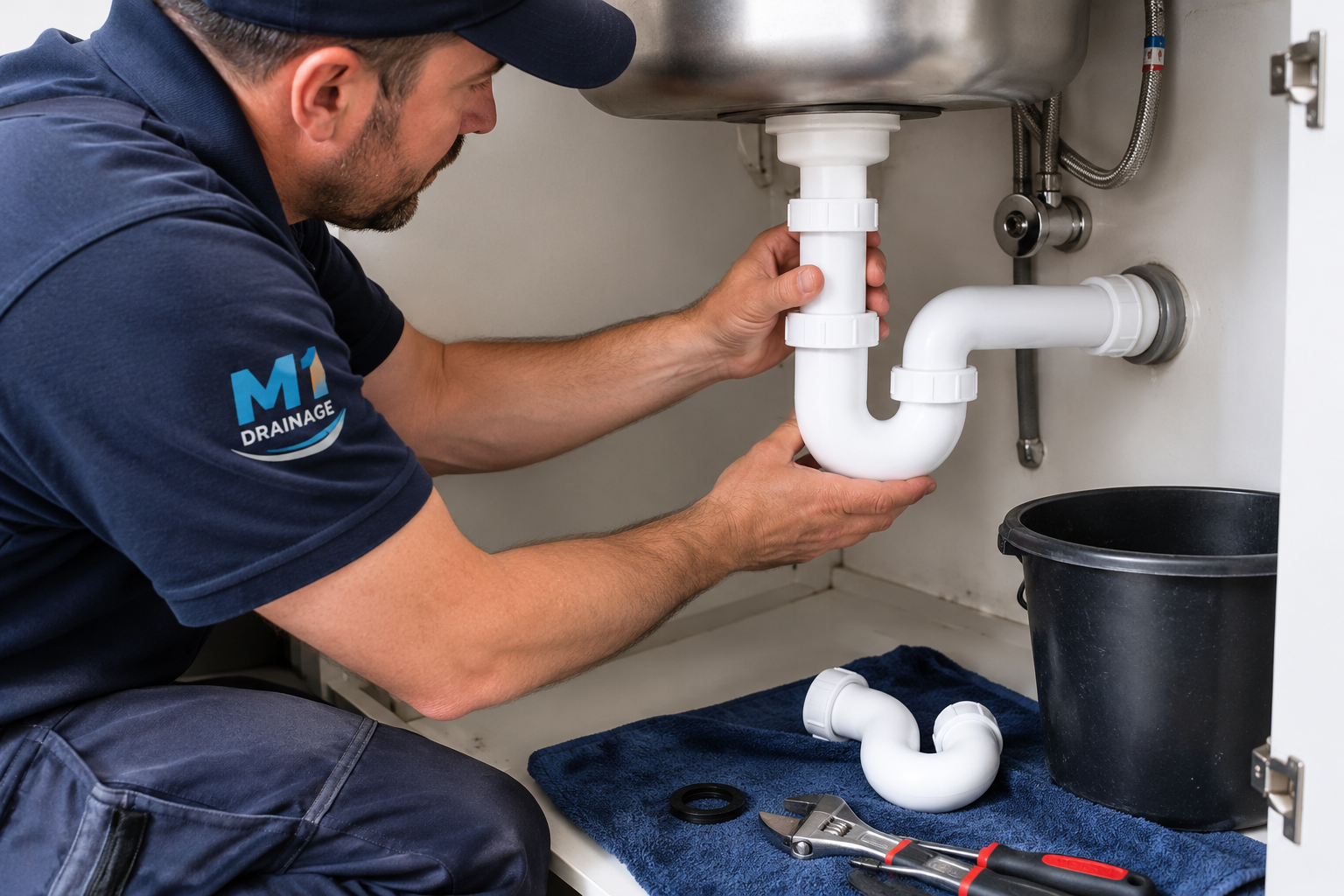
P Trap Installation Guide Milton Keynes: How to Fit a P-Trap Correctly
By M1 Drainage – Plumbing and Drainage Specialists in Milton Keynes
A P-trap is a small but essential part of your plumbing system. Whether you are installing a new kitchen sink, replacing a bathroom basin trap or dealing with unpleasant drain smells, understanding how a P-trap works can help you prevent leaks and keep your plumbing working properly.
At M1 Drainage, we help customers across Milton Keynes with drainage and plumbing problems. In this guide, we explain what a P-trap does, how to install one correctly and what to look out for if you experience leaks, slow drainage or bad smells.
What Is a P-Trap?
A P-trap is a curved section of pipe fitted underneath a sink, washbasin or another suitable plumbing fixture. It is designed to retain a small amount of water, creating a seal that helps prevent unpleasant sewer gases from entering your property.
The name comes from its shape, which resembles the letter P when viewed from the side.
A correctly installed P-trap helps to:
Prevent foul drainage smells from entering your home.
Allow wastewater to flow away from your sink or basin.
Provide access for cleaning and removing certain blockages.
Maintain a reliable connection between the appliance waste and the drainage pipe.
UK Building Regulations guidance requires suitable traps at discharge points to prevent foul air entering buildings. The correct trap size and water seal depend on the appliance and installation.
What Tools and Materials Do You Need?
Before starting a P-trap installation, make sure you have the correct parts for your existing pipework.
You may need:
A correctly sized P-trap.
Compatible waste pipe fittings and sealing washers.
An adjustable spanner, if required.
A bucket to catch water.
Cleaning cloths or towels.
A torch to inspect connections under the sink.
Bathroom basin waste traps are commonly 32mm, while kitchen sink traps are commonly 40mm. Always check the existing pipework and the manufacturer's instructions before purchasing a replacement.
Step-by-Step P-Trap Installation Guide
Step 1: Prepare the Work Area
Clear the cupboard underneath the sink or basin. Place a bucket beneath the existing trap to catch any water left inside it.
If you are replacing an existing trap, inspect the surrounding pipework for damage, corrosion or signs of leaking before proceeding.
Step 2: Remove the Old Trap
If replacing a trap, carefully loosen the connecting nuts and remove the old fitting. Be prepared for trapped water to spill out.
Clean the ends of the waste pipes and remove any old debris. Check the rubber washers and pipe connections to make sure they are in good condition.
Step 3: Check the Replacement P-Trap
Compare the new trap with the old one to make sure the diameter, outlet direction and connections are suitable.
The horizontal outlet must line up correctly with the waste pipe leading into the wall or drainage system. Avoid forcing the pipes into position, as this can put strain on the joints and cause leaks.
Step 4: Fit the Trap and Sealing Washers
Position the trap beneath the sink waste outlet, following the manufacturer's installation instructions.
Fit the supplied washers and compression nuts in the correct order. Make sure the seals sit evenly and the pipework is properly aligned before tightening the connections.
Plastic compression fittings should not be overtightened, as this can damage the threads or seals.
Step 5: Connect the Outlet Pipe
Connect the P-trap outlet to the existing waste pipe. Check that the pipework is properly supported and that the trap is not twisted or under tension.
The installation must maintain the correct drainage arrangement and water seal. If the existing pipework is incorrectly positioned or repeatedly loses its water seal, further investigation may be needed.
Step 6: Test for Leaks
Run water through the sink or basin and inspect every joint carefully.
Check for:
Drips around the waste outlet.
Water leaking from compression nuts.
Leaks where the trap meets the wall pipe.
Slow drainage or unusual gurgling sounds.
Persistent unpleasant smells.
If a joint leaks, stop using the appliance, check the washer position and follow the manufacturer's instructions before retesting.
Common P-Trap Installation Problems
1. Bad Smells Coming from the Sink
A damaged, incorrectly fitted or dried-out trap can allow foul smells to enter the property. If the smell persists after running water, the cause could also be a faulty seal, poor ventilation or a drainage problem elsewhere.
2. Water Leaking Under the Sink
Leaks often result from damaged washers, incorrectly aligned pipes or overtightened fittings. Replacing the affected seal or fitting may resolve the issue.
3. Slow Draining Water
Grease, food waste, soap residue and hair can build up inside waste pipes and traps. Cleaning an accessible trap may help, but a blockage further along the drainage system may require professional attention.
4. Gurgling Pipes
Gurgling can indicate restricted flow, pressure changes or a ventilation issue. If it occurs regularly, especially when other appliances discharge water, it is worth having the drainage system checked.
When Should You Call a Professional Plumber?
A straightforward, accessible trap replacement may be manageable for someone with suitable DIY experience. However, professional help is advisable if:
You cannot identify the correct trap or pipe size.
The pipework is concealed or difficult to access.
Connections continue to leak after replacement.
Bad smells keep returning.
Multiple sinks, toilets or showers are draining slowly.
You suspect a blockage in the main drainage system.
Correct installation matters because a poorly fitted trap can cause water damage, recurring smells and ongoing drainage problems.
Need Help with Plumbing or Drainage in Milton Keynes?
If you have a leaking sink trap, recurring drainage smells or a persistent blockage, M1 Drainage can help you identify the underlying problem.
We provide drainage services in Milton Keynes and surrounding areas, helping homeowners and businesses with blocked drains, drainage investigations and related problems.
Contact M1 Drainage today.
Phone: 07754 856275
Email: [email protected]
Website: https://m1drainage.co.uk/
For more information about our drainage services, visit our drain jetting service page.
Frequently Asked Questions
What does a P-trap do?
A P-trap retains water to help stop foul gases from travelling back through the waste pipe and into your home.
What size P-trap do I need?
A 32mm trap is common for bathroom basins, while 40mm traps are common for kitchen sinks. Confirm the required size against your existing pipework and appliance.
Can a P-trap cause a bad smell?
Yes. A dry, damaged or incorrectly installed trap can allow smells through. Persistent smells may also indicate a ventilation issue or a blockage elsewhere.
Can I install a P-trap myself?
An accessible replacement may be suitable for someone with plumbing experience. If you are unsure about the connections, pipe alignment or required trap type, consult a qualified plumber.
Do M1 Drainage cover Milton Keynes?
M1 Drainage provides drainage services in Milton Keynes and surrounding areas. Contact us to discuss your particular plumbing or drainage issue.
M1 Drainage – helping keep Milton Keynes homes and businesses flowing freely.
