

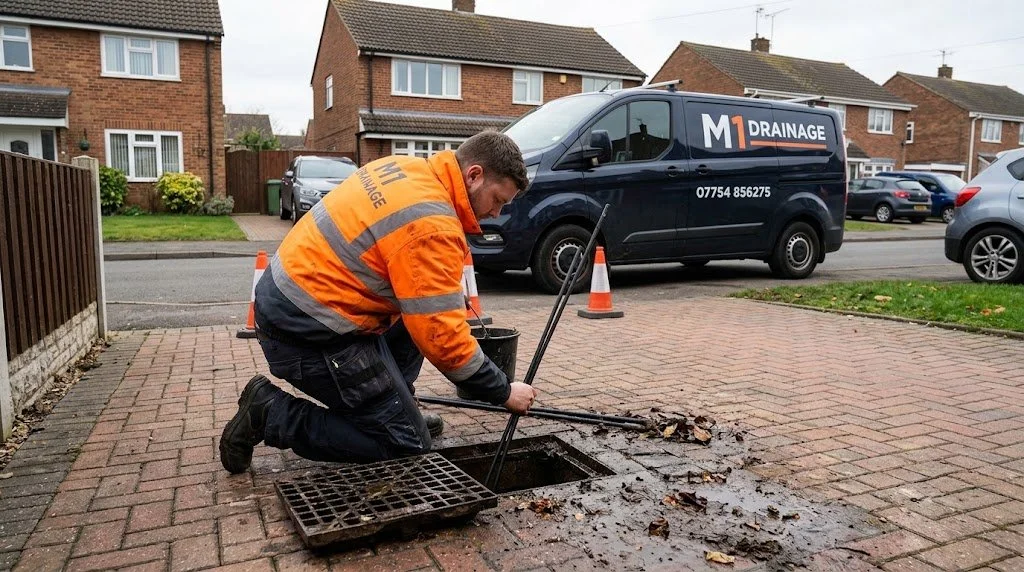
The Bletchley Drainage Guide 2026-27: How to Unblock Drains, Sinks, and Baths
Blocked drains are a disruptive and unhygienic nuisance that every homeowner will face at some point. Whether you live in a Victorian terrace in Old Bletchley or a modern new-build in Newton Leys, the causes of blockages—fat, hair, soap scum, and wet wipes—remain the same.
This comprehensive guide covers the most effective DIY methods for clearing sinks, baths, and external drains, tailored specifically for residents across the Bletchley area.
1. Drainage in the Bletchley Area: What You Need to Know
Bletchley’s diverse housing stock means drainage systems vary wildly from street to street. Understanding your local infrastructure can help you identify why your drains keep blocking.
Old Bletchley & Fenny Stratford: Properties in these historic areas often still rely on original clay pipework. These pipes are prone to ground movement, misaligned joints, and tree root ingress, making them highly susceptible to recurring blockages.
West Bletchley & Far Bletchley: Mid-century housing estates here typically feature early plastic or cast-iron soil stacks. Scale build-up over decades can reduce the internal diameter of the pipes, causing sinks and baths to drain slowly.
Newton Leys & Water Eaton: While newer developments benefit from modern PVC drainage, they frequently suffer from "post-construction" issues. Cement wash, rubble, and dropped tools left in the lines by builders are common culprits for sudden blockages in these newer homes.
2. How to Unblock a Bathroom or Kitchen Sink
A slow-draining sink is usually caused by a localized blockage in the P-trap (the U-shaped pipe beneath the plughole).
The Baking Soda and Vinegar Method This natural reaction breaks down soap scum and grease without melting your plastic pipework (a common risk with cheap chemical unblockers).
Pour one cup of baking soda directly down the plughole.
Follow it immediately with one cup of white vinegar.
Cover the plughole with a damp cloth to force the fizzing chemical reaction downwards into the blockage.
Leave it to work for 20 minutes.
Flush the drain with a kettle full of hot (not boiling) water.
Cleaning the P-Trap If the sink is completely backed up, you will need to manually clear the trap.
Place a bucket directly underneath the P-trap to catch stagnant water.
Unscrew the two threaded plastic collars connecting the trap to the sink waste and the main waste pipe.
Empty the contents of the trap into the bucket and clean the inside with an old toothbrush.
Screw the trap back into place, ensuring the rubber O-rings are seated correctly to prevent leaks, and run the tap to test the flow.
3. How to Clear a Blocked Bath or Shower
Shower trays and baths almost always block for one reason: hair combined with liquid soap, which creates a solid, matted lump just beneath the surface.
The Wire Hook Method Because bath traps are difficult to access from underneath, attacking the blockage from above is your best option.
Remove the shower drain cover (most simply lift out or unscrew).
Take a wire coat hanger, untwist it, and fashion a small, tight hook at one end.
Feed the hook down into the plughole, twist it to catch the matted hair, and slowly pull it back up.
Repeat this process until the wire comes up clean.
Flush the drain with hot water to clear out any remaining soap residue.
4. Dealing with Blocked Outside Drains (Gullies)
If your kitchen sink is draining slowly and you notice foul-smelling water pooling on your patio, the external gully is blocked. This is often caused by a buildup of cooking fat mixed with outdoor debris like leaves or moss.
Clearing an External Drain
Put on heavy-duty rubber gloves and remove the metal or plastic grid covering the drain.
Use a trowel or your hands to scoop out the physical debris blocking the top of the gully.
If the water level remains high, insert a drainage rod (available from most local hardware stores) into the pipe leading away from the house.
Push and twist the rod in a clockwise direction to break up the fatberg. Never twist anti-clockwise, as the rod sections will unscrew and become stuck in your drain.
Once the water drops, blast the drain with a garden hose on its highest pressure setting to wash away the remnants.
When to Call the Bletchley Drainage Experts
If you have tried the methods above and multiple drains in your house are still gurgling, backing up, or smelling of sewage, the blockage is located deeper in your main underground soil pipe.
At this stage, DIY methods will not work. You need professional high-pressure water jetting or a CCTV drain survey to locate and destroy the obstruction safely.
M1 Drainage provides rapid, 24/7 emergency drain unblocking across Bletchley, Fenny Stratford, Newton Leys, and all surrounding Milton Keynes suburbs. We arrive fully equipped to tackle the most stubborn blockages with zero call-out charges.
Need your drains flowing freely again? Call our emergency dispatch team now on 07754 856275.
